




















With remote work and cross-border trade now commonplace, more and more businesses are invoicing clients overseas.
Working with international customers has never been easier: you agree on a price, deliver the service, send the invoice, then, if all goes well, you receive payment.
In theory, the process is straightforward… That is, until something goes wrong.
When a foreign customer delays or ignores paying invoices, things can become infinitely more complicated. You may be dealing with a different legal system, unfamiliar business practices and the challenge of chasing a debt in a foreign country.
What would usually be straightforward at home can quickly become a slow, uncertain process.
Why collecting payment from foreign customers can be difficult
International debt recovery is rarely straightforward. Legal complexity is one of the biggest obstacles, with every country operating under its own rules governing contracts, payment terms and debt enforcement.
Even within the EU, where some frameworks are broadly aligned, meaningful differences remain. Further afield, international debt collection often means navigating local courts and engaging in-country legal support.
Language and cultural barriers add a layer of difficulty to cross-border B2B debt collection, too. A payment reminder that would be considered firm yet professional in one country can come across very differently in another. And ultimately, poor communication handling doesn’t just cause friction; it can actively reduce your chances of getting paid.
Time zones also compound the problem. What should be a simple exchange can stretch across days, giving debtors more opportunity to delay or disengage entirely.
Then there’s enforcement. Holding a valid invoice doesn’t automatically give you leverage. Tactics for chasing invoices that work in your home market often don’t travel well. Collecting debt abroad frequently requires local knowledge to elicit a meaningful response from the other side.
Steps to collect an unpaid invoice from a foreign customer
Once you understand the challenges of international debt recovery, the next step to getting paid is to take a structured approach.
Trying to recover an international invoice without a clear plan often leads to delays or missed opportunities. The process works best when you move in stages, starting with simple checks and communication, then escalating only if needed.
By following this approach, you can improve your chances of recovery while keeping time and costs under control.
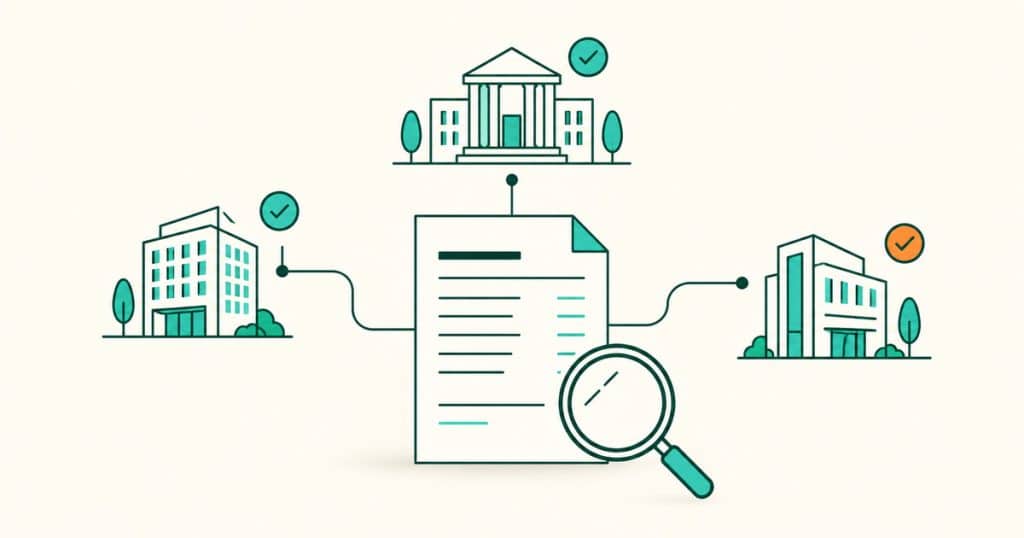
Step 1: Verify the debt and documentation
Before taking any action, it’s crucial to make sure your claim is solid. This may seem obvious, but weak or incomplete documentation is one of the main reasons international claims fail.
Start with the basics. Small errors can cause unnecessary disputes, so ensure the invoice is correct and properly issued. It should include clear payment terms, due dates and the full details of both parties.
Next, confirm that you have proof of the agreement. This could be a signed contract, an email exchange or any written confirmation of the work and the price.
You should also gather evidence that the work was completed or the goods were delivered. This might include delivery notes, project files, sign-offs or correspondence confirming acceptance.
It helps to organise everything in one place ahead of time, so if the case escalates, you’ll be able to provide this information quickly and clearly.
Step 2: Contact the customer
Once you have confidence in your documentation, the next step is to reach out to the customer.
Start with a polite reminder that is both short and factual. Refer to the invoice, the amount due and the original payment date.
In some cases, non-payment is simply an oversight. But if there’s no response, follow up with a firmer message. Make it clear that the invoice is overdue, ask when they intend to pay and set a new deadline.
If this fails, the final step is a formal notice. This should state how you will escalate the matter if payment is not made within a set period.
Be sure to keep the tone professional and avoid emotional language. Being too aggressive can backfire, especially across cultures.
Step 3: Decide whether the debt is worth pursuing further
Before you go any further, it’s important to take a step back and assess the situation. Not every unpaid invoice is worth chasing through formal channels.
Start with the size of the debt. Larger invoices are more likely to make the effort worthwhile, while smaller amounts may not justify the time and cost involved.
You should also consider the likelihood of recovery. If the debtor is unresponsive or appears to be in financial difficulty, the chances of getting paid may be lower. Basic checks on the company can help you make a more informed decision.
Legal and collection costs are another factor. These vary depending on the country and the method used. This is where structured, success-based services like Oddcoll can reduce risk, since we only proceed with local collection partners when there is a realistic chance of recovery.
Step 4: Use a local debt collection agency
In international cases, local expertise is often the key to success or failure, as debtors take the matter more seriously once a local agency becomes involved.
So, if your own efforts have failed to yield the desired results, contracting collection specialists based in the debtor’s country can significantly improve your chances of getting paid.
Local debt collection experts understand the legal system, language and business culture, making communication more direct and increasing the likelihood of a response.
That said, finding a reliable agency in another country can be time-consuming. You need to assess their quality, understand their process and manage communication across time zones and languages. If your business operates in multiple markets, scaling quickly becomes difficult.
This is where platforms like Oddcoll are designed to help. Instead of sourcing agencies yourself, we assign your case to a vetted local partner based on performance in that specific country. This removes much of the uncertainty around who to trust and how to start the process.
Step 5: Escalate to legal action, if needed
If informal contact and collection efforts still don’t lead to payment, you may need to consider legal action. This is usually a last step, but sometimes it’s the only remaining option.
Legal action can be effective, but it comes with costs and delays. Court proceedings in another country are rarely quick, and there is no guarantee of recovery even if you win the case.
The exact process depends on where the debtor is based. If the debtor is in the EU, the process is generally more straightforward. There are mechanisms designed to support cross-border claims, including simplified procedures for recovering uncontested debts. Though these reduce the need for local court action, they still require time and accurate documentation.
However, if the debtor is outside the EU, things become more complex. Each country has its own legal system, and enforcing a claim often means working within that system. This may involve hiring a local lawyer or working with a local debt collection partner who understands the process in that jurisdiction.
How Oddcoll helps collect an unpaid invoice from a foreign customer
Collecting an unpaid invoice across borders often fails for one simple reason: you do not have a local presence in the debtor’s country.
Oddcoll is designed to solve that problem through a structured, step-by-step process.
- Step 1: Submit your case
You upload the unpaid invoice along with relevant supporting documents, such as contracts or proof of delivery. - Step 2: Assignment to a local partner
We forward your case to a debt collection agency or legal partner in the debtor’s country. Oddcoll only works with vetted partners across different markets. - Step 3: Local contact with the debtor
Our local partner contacts the debtor directly, in the local language and in line with local practices. This may include written demands, calls or other standard collection actions. - Step 4: Ongoing handling of the case
Our partner manages communication and follow-up with the debtor. The exact approach will depend on the country, the debtor and the nature of the claim. - Step 5: Possible escalation
If the debt is not resolved through initial collection efforts, further steps may be considered. This can include legal action, depending on the circumstances and your approval. - Step 6: Outcome and fees
We operate on a no-win, no-fee basis, meaning you only pay if we successfully recover your debt. Our commission is typically 9.5% within Europe and 19.5% outside Europe. If legal action is required, any additional costs will be agreed with you in advance.
This approach allows businesses to access local expertise without having to source and manage providers in each country themselves.
Get help recovering your international invoice
If you’re dealing with an unpaid invoice from a foreign customer, acting early can make a significant difference.
Handling everything internally may work in some cases, but international debt recovery often requires local expertise to move forward effectively.
Using Oddcoll gives you access to vetted local debt collection partners without the need to search for them yourself. Cases are handled in the debtor’s country, using the right approach from the start.
If you want to improve your chances of recovering an unpaid international invoice, the next step is simple. Submit your case now and trust our tried-and-tested process that has been fine-tuned for optimal cross-border recovery.