






















Debt Collection in Bosnia and Herzegovina
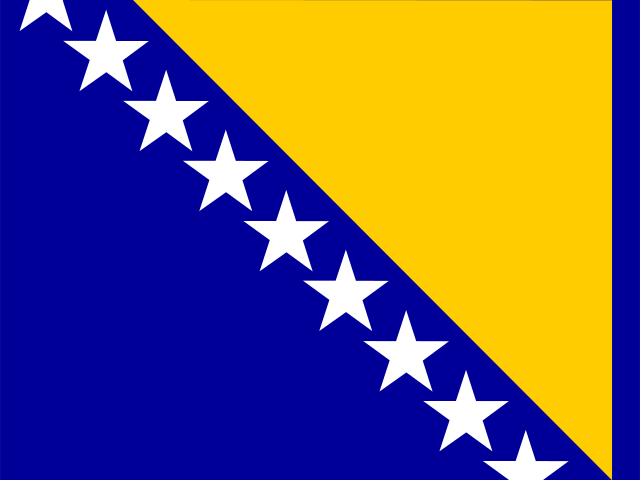
Debt collection in Bosnia and Herzegovina (BiH) follows a structure similar to many European countries, but with several critical local characteristics. The legal system, the country’s structure, and procedural rules mean that foreign creditors benefit significantly from using a locally established debt collection agency or law firm. Below is an overview of how the process typically works, from amicable actions to legal enforcement.
1. Background: A Complex Legal Environment
Bosnia and Herzegovina is a decentralized state composed of two main entities:
- The Federation of Bosnia and Herzegovina (FBiH)
- The Republika Srpska (RS)
- and the small Brčko District.
Each entity has its own legal framework and courts. This means debt collection can vary depending on the debtor’s location. Foreign creditors often face difficulties navigating these regional differences without help from specialists who operate locally.
2. The Amicable Collection Phase
The international debt collection process always begins with amicable, out-of-court steps.
A local Bosnian debt collection agency will start by:
- Verifying the debtor’s identity and company details
- Checking the existence of the debt and reviewing the documentation (invoices, contracts, delivery confirmations, etc.)
- Contacting the debtor through phone calls, emails, and written notices
- Informing the debtor of potential legal consequences if the debt is not settled
In Bosnia, debtors often respond more quickly to communication from a local authority than to that from a foreign company. Local collectors also understand cultural and business norms, which is crucial. Many disputes are resolved at this stage because companies prefer avoiding court proceedings.
3. Payment Agreements and Settlements
If the debtor acknowledges the debt but cannot pay the full amount immediately, the collector may negotiate a structured payment plan. Such agreements must often be put in writing and signed to ensure enforceability later.
Bosnian law also allows interest and collection costs to be added, but the amounts depend on entity-specific regulations. A local specialist ensures those costs are calculated correctly.
4. Legal Collection: When Amicable Efforts Fail
If the debt is not paid voluntarily, the case moves to the legal stage. Because of Bosnia’s dual-entity structure, choosing the correct court is crucial.
The legal process typically begins with a payment order request (“prijedlog za izvršenje”).
This is the fastest legal tool for uncontested claims.
The court can issue a payment order if:
- The debt is documented and clearly defined
- Supporting documents (invoices, contracts) are provided
- The debtor is identified correctly
If the debtor objects, the case may proceed to a standard civil lawsuit, which takes longer.
5. Enforcement (Execution) of the Claim
When a payment order or court judgment becomes final, the creditor can begin enforcement (execution). Each entity has its own enforcement procedures, but standard enforcement methods include:
- Seizure of bank accounts
- Blocking of business activities (in certain circumstances)
- Seizure of movable assets (vehicles, machines)
- Seizure of immovable assets (real estate)
- Withholding from the debtor’s revenue
Local enforcement officers (“sudski izvršitelji”) carry out the enforcement under the supervision of the court. A foreign creditor cannot directly start enforcement — they must act through a local representative.
6. Cross-Border considerations
For international creditors, it is essential to know that Bosnia and Herzegovina is not part of the EU. This means that EU regulations (such as the European Payment Order) do not apply. Every claim must therefore be handled in accordance with Bosnian national law, making a local agency essential.
Bosnia, however, has bilateral treaties and recognizes foreign judgments under specific conditions. Recognition requires a court procedure, which again must be initiated by a Bosnian lawyer.
7. Why is local assistance essential for debt collection
The complexity of the legal system, combined with language barriers and administrative differences between the entities, makes local expertise essential. A local agency understands:
- Which courts have jurisdiction
- How to communicate effectively with Bosnian companies
- Which enforcement methods work best
- What documentation do the courts require
- How to navigate regional differences in the laws
Without this, the process becomes slow, expensive, and prone to mistakes.
Oddcoll platform makes international debt recovery fast, simple, and effective. Instead of wasting time navigating foreign laws, languages, and slow-moving agencies, you get instant access to the best local debt collection specialists in the debtor’s own country. Every case is handled directly on the ground by top-performing agencies and law firms handpicked for their results. You only pay when they succeed, making the entire process risk-free.