





















Timing is often the biggest problem for any finance team. You’ve got revenue booked and deals closed, but cash is still tied up in unpaid invoices. Having such a gap between earning money and actually receiving it can quietly strain even the healthiest businesses.
One of the most important metrics for understanding this gap is Days Sales Outstanding (DSO). It shows how long, on average, it takes a company to collect payment after a credit sale.
For CFOs and finance managers, DSO is more than just a number. It’s a direct reflection of cash-flow efficiency, customer payment behaviour and operational discipline. Improving it, therefore, doesn’t require more sales; it requires getting paid faster for the sales you have already made.
What is Days Sales Outstanding (DSO)?
According to the Association for Financial Professionals, Days Sales Outstanding (DSO) is a metric that measures the average number of days it takes a business to collect payment from its customers after a credit sale. In simple terms, it tells you how quickly your company turns receivables into cash.
A lower DSO means customers are paying promptly, which supports healthy cash flow. By contrast, a higher DSO indicates payment delays, leaving cash tied up in outstanding invoices for longer periods.
DSO is particularly important for B2B businesses, where offering payment terms of 30, 60 or even 90 days is common. While these terms can help win business, they also introduce risk and can slow down access to working capital.
Tracking DSO over time helps finance teams understand whether collections are improving or deteriorating. It also provides insight into customer behaviour, credit policies and the overall efficiency of the accounts receivable process.
How to calculate DSO: a practical formula
Calculating your company’s Days Sales Outstanding rate is simple. Here’s the formula:
Days Sales Outstanding (DSO) = (Accounts Receivable / Total Credit Sales) × Number of Days
In this formula, ‘accounts receivable’ refers to the money your customers still owe you; ‘total credit sales’ refers to the sales you made where customers didn’t pay immediately; and ‘number of days’ refers to the period you’re measuring (for example, 30, 90 or 365 days).
Therefore, if customers owe you €100,000 and you made €300,000 in credit sales over 90 days, your DSO would be 30 days.
In practical terms, this means it takes about one month to get paid after making a sale. The lower this number, the faster cash is coming into your business.
What is a good DSO?
There is no universal benchmark for a “good” DSO, as it varies significantly by industry, business model and payment terms. That said, according to CFI, anything under 45 days is considered good for most businesses.
However, a general rule is that DSO should be as close as possible to your agreed payment terms. For example, if your standard terms are 30 days, a DSO of 30 to 45 days may be acceptable. Anything significantly higher suggests delays in collections or issues with customer payment behaviour.
Importantly, it’s the trend over time that is a real signal of a business’s health. A steadily increasing DSO can signal deeper problems, such as inefficient follow-up processes, overly lenient credit policies or growing exposure to late-paying customers.
Why a high DSO is bad for financial health
Even if sales are strong on paper, having a high DSO can create pressure across multiple areas of a business.
When payments are delayed, the most immediate impact is on cash flow. Companies may struggle to cover day-to-day expenses such as salaries, supplier invoices or operational costs. Over time, this can lead to increased reliance on external financing, such as credit lines or loans, which adds both cost and risk.
A high DSO can also quietly act as a brake on an otherwise successful business. This is because cash tied up in receivables limits growth: this money cannot be reinvested in hiring, expansion or new opportunities.
Additionally, high DSO also increases exposure to bad debt. The longer an invoice remains unpaid, the lower the likelihood of full recovery. What begins as a short delay can eventually turn into a write-off, directly affecting profitability.
Ways companies can improve their DSO
If you’re looking to improve your DSO, it’s not a question of chasing invoices harder: it’s about building a process that makes it easier, and more likely, for customers to pay on time.
Here are seven proven ways to improve DSO:
- Tighten payment terms. If your standard contract terms are 60 or 90 days, consider whether they are really necessary. Shorter terms reduce risk and set clearer expectations from the outset.
- Invoice faster and more accurately. Most delays begin internally. If invoices are sent late, unclear or contain errors, payment will be delayed. Send invoices immediately after delivery and make sure all details are correct, including payment instructions.
- Automate reminders. Many late payments are not intentional. Automated reminders before and after the due date can significantly reduce delays without increasing manual workload.
- Incentivise early payment. Offering small discounts for early payment are are known strategy for improving cash flow, especially with larger clients. Even a 1–2% incentive can encourage faster settlement.
- Segment customers by risk. Not all customers behave the same. Identify which clients consistently pay late and adjust your approach. This might include stricter terms, closer monitoring or requiring partial upfront payment.
- Follow up consistently. Consistency matters more than intensity. A structured follow-up process (emails, calls and escalation steps) helps ensure invoices do not slip through the cracks.
- Use external collection partners. At a certain point, internal efforts reach their limit. When invoices remain unpaid, especially across borders, external support can improve recovery rates. Used correctly, external collections are not just a last resort. They can be a strategic tool for reducing DSO and freeing up internal resources.
How international debt collection solutions can reduce DSO
Collecting payments is rarely straightforward, but it becomes significantly more complex when customers are based in different countries.
Each market has its own legal framework, business culture and expectations around payment. As a result, overdue invoices often remain unpaid for longer, increasing Days Sales Outstanding (DSO) and the risk of bad debt.
This is where Oddcoll can help.
- Upload your unpaid B2B invoice to the Oddcoll platform.
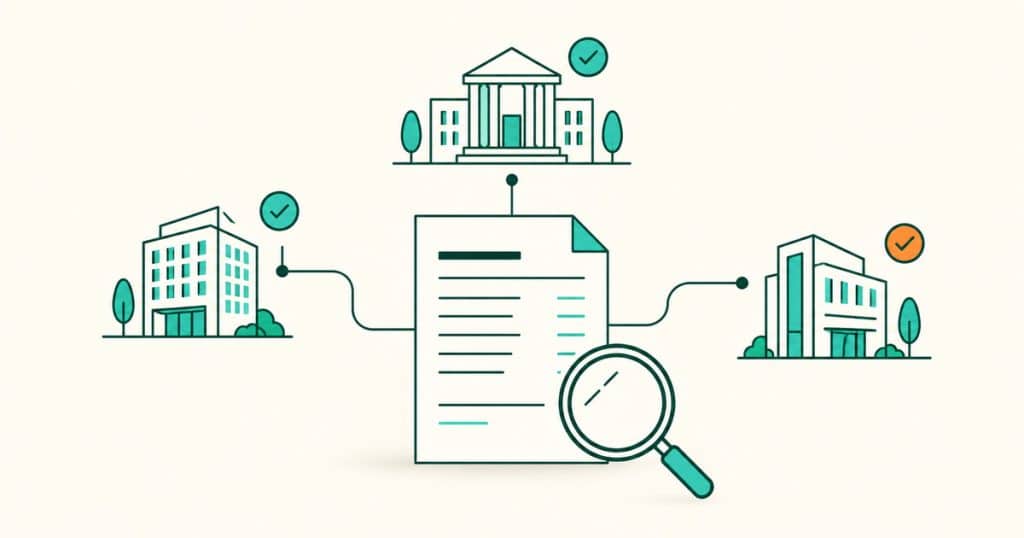
- We review the case and match it with a vetted local debt collection agency in the debtor’s country.
- The local agency contacts the debtor directly in their own language and within their local business culture.
- They begin formal collection actions, including reminders and structured payment requests.
- If payment is still not made, the case can be escalated using local legal procedures and enforcement routes where necessary.
If used correctly, external collections are more than a last resort for unpaid debt. They can be a strategic tool for credit control, helping to reduce DSO, improve cash flow predictability and free up internal finance teams to focus on higher-value work.
Reduce DSO and improve your cash flow today!
If improving cash flow and reducing DSO are priorities for your business, the next step is not just to track unpaid invoices more closely; it’s to put systems in place that actively improve them.
If your business is dealing with slow-paying customers internationally, it’s time to rethink how you handle overdue invoices. At Oddcoll, we provide a structured, localised approach to debt collection that can help recover payments faster and bring DSO back under control.
Get in touch today and start improving your business’s cash flow now!